When considering outpatient treatment, most high-performing professionals worry about one thing: “Can I get sober without losing my seat at the desk or simply, their job?”
However, things have changed. The old-school idea of rehab, where you check out of life for 30 days to sit in a circle in the woods, doesn’t really fit with a job in 2026.
This is where outpatient treatment comes in, but in a new way for today. We are not talking about old church basements anymore. We’re talking about addiction treatment that is both high-tech and high-touch and respects your schedule. Furthermore, this approach ensures you don’t have to pause your life to save it.
How do we plan a recovery route that doesn’t just “fix” an issue but also makes your work-life balance better? Let’s take a look at the plan for the 9-to-5 recuperation.
Changing the Modern Outpatient Meaning
We need to be sure we understand what “outpatient” means for 2026 before we talk about the tech. Specifically, it’s no “light rehab.” It is a complex, medical-grade intervention that takes place while you are still in charge of your team.
For a lot of people, the first step is to find a rehab centre that knows the difference between a college student and a CEO.
This paradigm or model doesn’t see alcoholism as a weakness in a person’s character, but as a physical problem. Consequently, staying in your native environment helps you learn how to deal with triggers in real time. You aren’t getting better in a vacuum; you’re getting better in the boardroom.
Real Work-life Balance with Flexible Scheduling for Recovery
The clock has always been the main problem with alcohol treatment. We no longer have strict clinic hours from 9 AM to 5 PM in 2026. Why? Because that’s when your work needs you the most. As a result, programs have evolved to be far more accommodating.
The new “9-to-5 recovery” offers:

- Executive Tracks: Group sessions with other people who know what it’s like to be under a lot of stress.
- Modular Blocks: 60-minute “sprints” that focus on controlling cravings.
- Evening IOP: Intensive care from 6 PM to 9 PM to help you keep your work-life balance.
This flexibility makes sure that outpatient treatment fits into your life like a gym membership or a regular sync meeting. It’s not about stopping, it’s about bringing everything together.
Digital Continuity & the Telehealth Revolution
Do you remember when “remote” was a compromise? Telehealth is the best way to keep things private in 2026. Your support system goes with you when you travel for a conference or are locked in a late-night negotiation.
For instance, you can talk to your therapist or a peer group using encrypted telehealth portals from a hotel room in Bali or a home office in Mumbai. This consistency changes the game for treating alcoholism. It gets rid of the excuse “I’m too busy to go to the clinic” completely. Their digital infrastructure is just as crucial as their actual location when you look for a rehab centre today.
Wearable Recovery Tech: Your Quiet Partner
By 2026, wearable recovery tech will be an important part of any effort to add to addiction treatment. Picture a smartwatch that does more than just count your steps; it also keeps an eye on your neurological system. In essence, it acts as an early warning system.
These gadgets keep track of:
- Heart Rate Variability (HRV): To find out when your stress levels are going up before you even feel it.
- Sleep Quality: Being tired is one of the main reasons people relapse.
- Mood Patterning: Using AI to find the “danger zones” in your week.
If your data spikes, your clinical team can send you a rapid text. This proactive approach to outpatient treatment stops a slip from happening in the first place. Essentially, you have a recovery coach with you all the time.
Clinical Innovations in Alcoholism and Alcohol Treatment
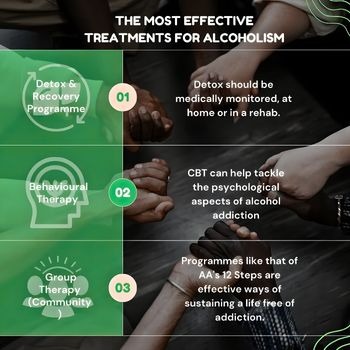
We have made a lot of progress in how we treat alcoholism medically. There is a huge movement toward “Bio-Psych-Social” models by 2026. In other words, rehabs treat both the body and the mind at the same time.
Now, Medication-Assisted Treatment (MAT) contains choices that don’t need a daily pill and last longer. We are also seeing the use of GLP-1 drugs, which have shown great promise in lowering cravings.
This is the best evidence-based treatment for addiction. It levels the playing field, which makes the “willpower” argument useless. The drug takes care of the chemistry, so you may focus on your work.
How to Get Out of the Workplace Burnout & Improve Work-Life Balance

Let’s speak about why we drink in the first place. Most professionals use it to deal with burnout. Therefore, this needs to be dealt with head-on in an outpatient treatment program in 2026.
Rehabs use executive coaching to help you set limits and give others more responsibility. Additionally, mindfulness can help you get through a bad meeting without needing a drink later. It’s not just about breaking a bad habit; it’s also about improving your professional skills. The “need” for alcohol naturally goes down when you improve your work-life balance.
Responsibility & the Fear of Relapse
The thought of a relapse damaging your work is one of the most frightening parts of recovery. To fight this, current initiatives offer private, high-tech ways to keep people accountable. Moreover, with a remote, smartphone-linked breathalyzer, you can quickly prove to yourself (or your boss) that you’re sober.
Long-term care is also very important. Six weeks isn’t the end of recovery. In 2026, outpatient treatment will include a year of “maintenance” care. This keeps you in touch with a group of people who care about both being sober and working hard. Ultimately, it turns a possible disaster into a success story that lasts a long time.
The Employer Partnership for Successful Outpatient Treatment
The stigma is going away in 2026. Companies that are ahead of the curve increasingly see addiction treatment as a routine health benefit. Moreover, studies also show that for every $1 an employer invests in comprehensive addiction benefits, they see a return of $4 to $7 in reduced absenteeism and improved productivity.
Today, rehabs work together with HR and EAPs to make sure that your return to full duty goes well.
This relationship often includes:
- Rules for Keeping Things Private: Making sure that your medical information stays private.
- Workplace Re-entry Plans: Planning work hours so that people don’t become burned out too soon.
- Education: Teaching managers how to help an employee who is recovering from a high-performance job.
Your Next Step Towards a Better Future in Your Career: Recovering Professionally
For outpatient treatment, the “9-to-5 recovery” is no longer an ideal; it has become the standard. In order to survive, you need not quit your job. Using telehealth, smart technology, and flexible care, you can stay sober for a long time.
The tools are ready for you, whether you want to help yourself or someone else in your team. You can have a better work-life balance and a life without alcohol.
FAQs—
1. What does “outpatient” mean in a professional context nowadays?
A: The term “outpatient” now denotes a “hybrid” approach to healthcare as of the year 2026. Similar to telemedicine, it provides hospital-level care in a more convenient setting. Professionals can seek alcohol treatment without having to leave work because of this.
2. How can recovery gear you’re prevent from going back to your old habits?
A: Wearable recovery technology keeps an eye on physical indications of stress and cravings. By doing so, the technology lets people intervene “just in time” by spotting these tendencies early. This greatly minimizes the chance of a relapse by stopping biological cues before they turn into actions.
3. Is it possible to keep anonymous while getting help for addiction?
A: Of course. High-level privacy is a big part of modern outpatient treatment. The idea is to deliver top-notch care without letting your coworkers know unless you want them to. This can be done through private telemedicine sessions or scheduling outside of business hours.
4. How does this method help me balance my professional and personal life?
A: You actually get more done when you deal with the stress and exhaustion that lead to drinking. It teaches you “executive skills” for recovery, which help you balance your job and personal life better and get more done.